
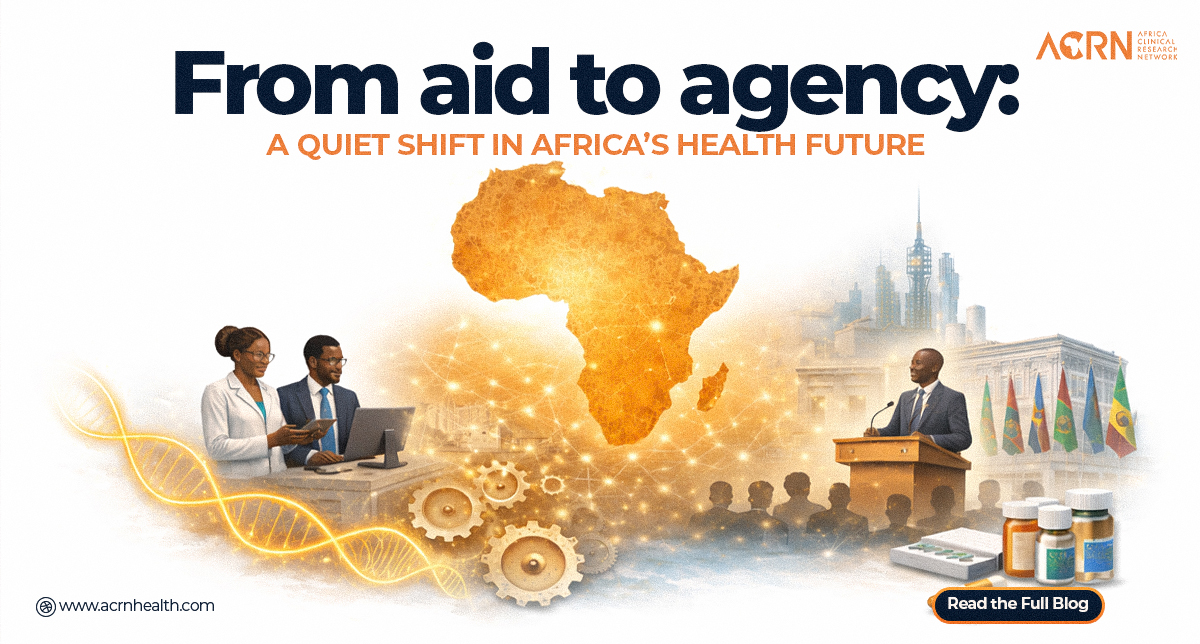
Across Africa, something subtle but important is changing in the way leaders talk about health.
For many years, health systems across the continent were largely framed through the lens of global solidarity: donor programs, development assistance, and externally funded initiatives that helped expand access to medicines, vaccines, and lifesaving services. These investments saved millions of lives and built important foundations.
But the landscape is changing.
Today, a growing number of policymakers, economists, and public health leaders are beginning to frame health in a different way, not primarily as a social expenditure, but as a strategic sector of the economy. Increasingly, health is being discussed alongside infrastructure, energy, and technology as a pillar of national development. From the World Health Expo (WHX) Leaders Africa in Ghana, the ECSA-HC Health Ministers Conference in Eswatini to the Network of African Parliamentary Committees of Health (NEAPACOH) parliamentary gathering in Zambia, health is being discussed as an indispensable aspect of economic development.
This shift reflects both necessity and opportunity.
Development assistance is becoming less predictable, while many countries face rising debt obligations and tightening fiscal space. The dual burden of disease is getting hold of the continent, a research indicating that NCD-related mortality is expected to grow by 15% globally (1). At the same time, Africa’s population is growing rapidly, urbanizing quickly, and confronting both infectious diseases and a rising burden of non-communicable diseases.
Against this backdrop, health systems are no longer viewed simply as service providers. They are increasingly seen as engines of economic productivity, scientific capability, and industrial development.
Health as economic infrastructure
The idea that health drives economic growth is not new. Healthy populations are more productive, more resilient, and better able to participate in education and the workforce. As demonstrated by the four Asian Tigers (Singapore, Hong Kong, South Korea, and Taiwan) who invested significantly in health and increased their per capita productivity in a manner that profoundly shaped their economic growth trajectory (2).
What is new is the growing recognition that the broader health ecosystem, research institutions, regulatory agencies, pharmaceutical manufacturing, and data systems, also represents a strategic economic asset.
Clinical research, for example, does far more than test new medicines. It trains scientists and clinicians, builds advanced laboratory infrastructure, generates local data to inform policy, and attracts international investment. Research institutions can anchor innovation ecosystems in the same way that universities and technology hubs do in other sectors.
Similarly, strong regulatory systems do more than approve medicines. They enable countries to participate in global pharmaceutical markets, ensure patient safety, and support the development of domestic life sciences industries.
When viewed through this lens, investments in health systems become investments in national capability.
The rise of pharmaceutical ambition
Another important dimension of this shift is the growing ambition across the continent to expand pharmaceutical manufacturing.
The COVID-19 pandemic revealed how vulnerable global supply chains can be. During the early months of the pandemic, many African countries struggled to secure access to vaccines, diagnostics, and essential medicines.
In response, governments and regional institutions have begun to pursue strategies aimed at strengthening pharmaceutical production within Africa. These efforts build on earlier initiatives such as the Pharmaceutical Manufacturing Plan for Africa (PMPA), adopted by the African Union to promote local production of high quality and affordable medicines and reduce external dependencies (3). The Partnership for African Vaccine Manufacturing (PAVM) and Africa Pharmaceutical Technology Foundation (APTF) are also efforts towards enabling Africa to produce a significant portion of needed vaccines and medicines locally (4,5).
But manufacturing does not exist in isolation.
To develop and distribute medicines successfully, countries need strong clinical trial networks, pharmacovigilance systems, regulatory expertise, and research capacity. Without these systems, locally produced medicines may struggle to gain regulatory approval, market confidence, or local and international credibility.
In other words, pharmaceutical sovereignty requires a strong research ecosystem, because without scientific sovereignty, pharmaceutical sovereignty becomes lip service.
Research as a public good
For many years, a large share of clinical research conducted in Africa has been funded by global health donors or international pharmaceutical companies.
These partnerships have generated enormous value, from groundbreaking HIV and malaria trials to new vaccines and treatments. But they have also highlighted a persistent challenge: research capacity has often been built project by project, rather than as a fully integrated national system.
A growing number of African leaders are now recognizing that research should be treated as a long-term public good, something that is embedded within national health systems rather than dependent solely on external funding cycles. While Organisation for Economic Co-operation and Development (OECD) countries spend between 2.7-3% of GDP on R&D, Sub-Saharan Africa spends roughly 0.4-0.5% of GDP average on R&D (6,7). This creates vicious circle of limited health infrastructure and slower response to emerging health threats in Africa.
Local research capacity allows countries to generate evidence relevant to their populations, respond more rapidly to emerging health threats, and participate more actively in global scientific collaboration.
Just as importantly, it ensures that African scientists, clinicians, and institutions help shape the future of medicine.
Regional collaboration and regulatory evolution
Another defining feature of this moment is the increasing emphasis on regional collaboration.
Health challenges do not stop at national borders. Neither do clinical trials, pharmaceutical supply chains, or disease outbreaks. Strengthening cooperation between African countries, particularly in areas such as regulatory science, data governance, and clinical trial oversight, has become a priority.
Initiatives aimed at regulatory harmonization and continental coordination are gaining momentum. The African Medicines Agency (AMA) is now fully operational, with concerted efforts for ratification of the AMA Treaty by member states (8). These efforts aim to reduce duplication, accelerate approvals for new medicines, and create a more predictable environment for research and innovation.
If successful, they could significantly expand the scale and impact of Africa’s clinical research ecosystem.
The implementation challenge
Of course, recognizing the importance of health systems and research capacity is only the first step.
The real challenge lies in translating these ideas into policy and investment.
Building resilient health systems requires sustained financing, long-term planning, and political commitment that extends beyond electoral cycles. Research infrastructure takes years to develop. Regulatory expertise requires training and institutional stability.
In a world of competing budget priorities, these investments are not always easy.
But the direction of travel is becoming clearer.
Across ministries of finance, health, and industry, conversations about health are increasingly connected to broader economic strategies. The life sciences sector, once considered peripheral in many economies, is beginning to be recognized as a source of innovation, employment, and technological advancement.
A continent shaping its own health future
The most significant aspect of this shift may be the growing sense of agency.
Rather than positioning health systems primarily within a framework of external support, many African leaders are now articulating a vision in which the continent plays a larger role in generating knowledge, developing medicines, and shaping global health priorities.
This does not mean turning away from international partnerships. Collaboration remains essential.
But it does mean building the institutions, research capacity, and regulatory systems that allow African countries to participate as equal partners in the global health ecosystem.
The transformation will not happen overnight.
Yet the conversations taking place across the continent, from research institutions and universities to ministries and parliaments, suggest that a new chapter is beginning. A chapter in which Africa is not only a participant in global health innovation, but increasingly one of its architects.
References
- Report on the status of major health risk factors for noncommunicable diseases: WHO African Region, 2015 | WHO | Regional Office for Africa [Internet]. 2026 [cited 2026 Mar 11]. Available from: https://www.afro.who.int/publications/report-status-major-health-risk-factors-noncommunicable-diseases-who-african-region-0
- Four Asian Tigers. Corporate Finance Institute [Internet]. [cited 2026 Mar 11]. Available from: https://corporatefinanceinstitute.com/resources/economics/four-asian-tigers/
- PHARMACEUTICAL MANUFACTURING PLAN FOR AFRICA | AUDA-NEPAD [Internet]. [cited 2026 Mar 11]. Available from: https://www.nepad.org/publication/pharmaceutical-manufacturing-plan-africa
- Partnerships for African Vaccine Manufacturing (PAVM) Framework for Action. Africa CDC [Internet]. [cited 2026 Mar 11]. Available from: https://africacdc.org/download/partnerships-for-african-vaccine-manufacturing-pavm-framework-for-action/
- The African Pharmaceutical Technology Foundation [Internet]. [cited 2026 Mar 11]. Available from: https://www.aptfound.org/about-us
- R&D spending growth slows in OECD, surges in China; government support for energy anddefenceR&D rises sharply [Internet]. 2025 [cited 2026 Mar 11]. Available from: https://www.oecd.org/en/data/insights/statistical-releases/2025/03/rd-spending-growth-slows-in-oecd-surges-in-china-government-support-for-energy-and-defence-rd-rises-sharply.html
- World Economic Forum [Internet]. 2023 [cited 2026 Mar 11]. African countries spend on average 0.45% of their GDP on R&D, far below the global average of 1.7%. Available from: https://www.weforum.org/stories/2023/11/innovative-approaches-for-unlocking-research-and-development-funding-in-africa/
- African leaders call onremaining24 Member States to ratify the AMA Treaty – African Medicines Agency [Internet]. [cited 2026 Mar 11]. Available from: https://au-ama.africa/news_events/ama-presidential-breakfast/